Dance pedagogueArtistic-researcherGuest teacherTeaching
Engagement
Professional Companies
Tanztheater Wuppertal Pina Bausch
Dresden Frankfurt Dance Company
Norrdans
Cullberg
Landestheater Linz
Independent Scene
ImPulsTanz Vienna International Dance Festival
Judith Sánchez Ruíz Professional Contemporary Dancer Certification Program
Tanzquartier Vienna
Mousonturm Frankfurt
Profitraining Basel
Marameo Berlin
Gibney Dance Center New York City
Danscentrum Stockholm
Universities
Inter-city Center for Dance HZT at the University of the Arts Berlin
Stockholm University of the Arts
Iceland University of the Arts
Zurich University of the Arts
Eugene Lang College at The New School
People are not born to do ballet. They learn to do it. What is learned and how?
As an educator, I work with students from many different cultural and artistic backgrounds. I teach technique as a way of learning how your body actually works, not fighting against itself, but moving efficiently and with purpose. Artistic purposes are wide ranging and inspired by divergent forces. How can ballet pedagogy aim to not interfere with those necessary divergences that make the artist?
My unique approach to ballet comes from ten years of studying with Janet Panetta.
Panetta taught classical ballet in a way that re-directed dancers’ attention from perfect image to wide-ranging movement knowledge (more on my work with Panetta is at the end of this page). In short, I inherit a particular way of focusing ballet pedagogy around what a body can do, today, on its own terms. It is a functional perspective based on interpersonal and social relationships. On a practical level, my technique work is informed by proper anatomy. It is aware and inspired of the contemporary ballet aesthetic of hyper-mobility. However, while acknowledging components and trends in the classical ballet field that signal “good technique,” it proposes alternatives that allow fully bodied movement to become spatial while staying inside the range of motion that feels more honest, and appears as such. Dancers in my classes are challenged to do ballet forms from the inside out. The reason is ethical as well as aesthetic. Dancing ballet, we have to feel right. There is confidence in feeling right and practicing ballet with that disciplinary compass. Through this compass, a singular beauty emerges; it is sensually satisfying, externally captivating, and signals a readiness for choreographic experimentation.
In my classes, every body matters. Over my years as a teacher in Europe and New York City, I have witnessed a uniquely energized aesthetic following this premise.
I care about how the movement feels and functions, how it fits with the music, your sense of timing, your presence in the room in relation to others, and your body's natural instinct for internal well-being.
Teaching formats
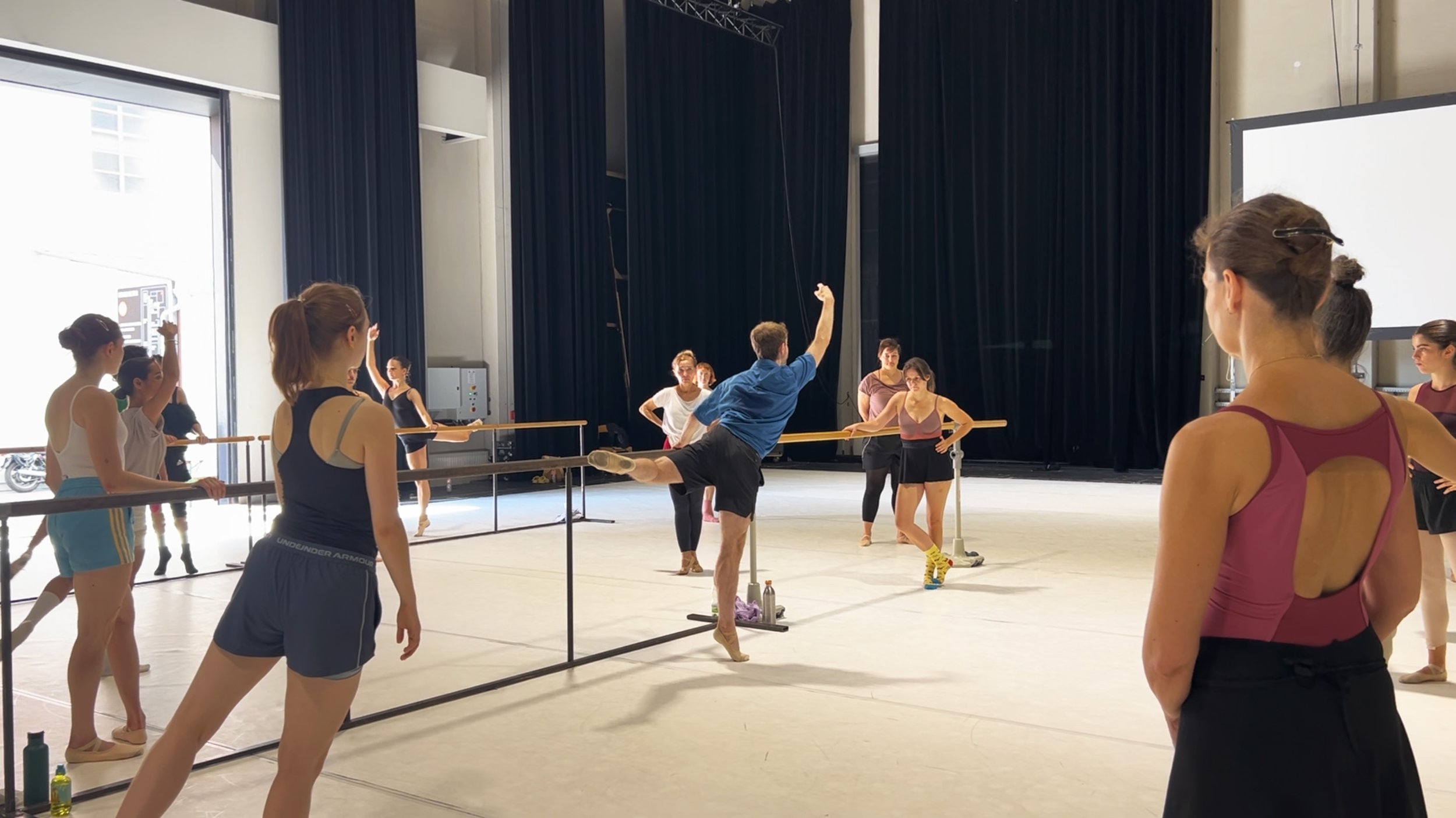
Ballet for Contemporary Dancers
1.5–2 hours
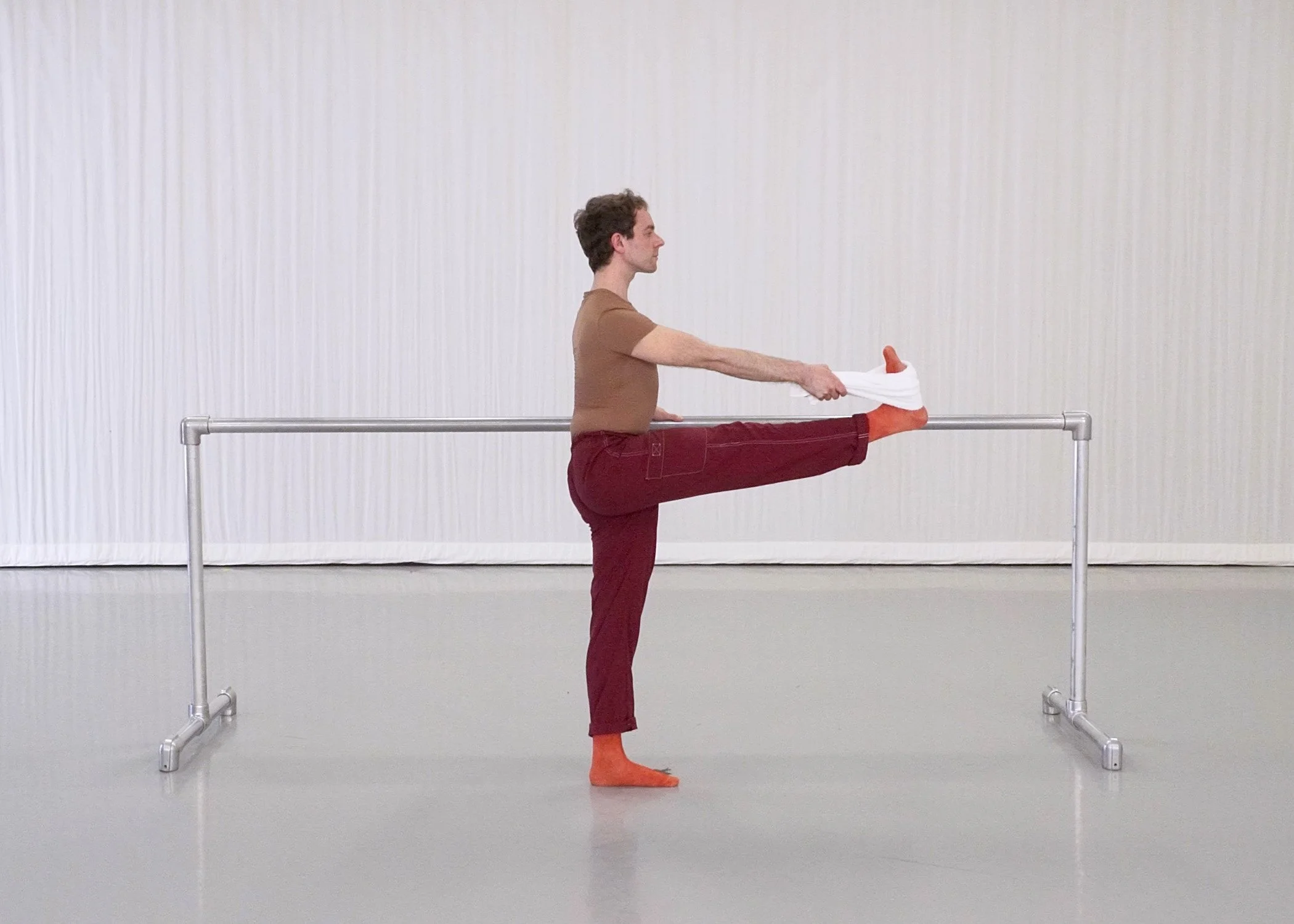
Conventional class structure with barre work, center exercises, across-the-floor and allegro, within which principles of Cecchetti-informed technique are examined as investigative practice.
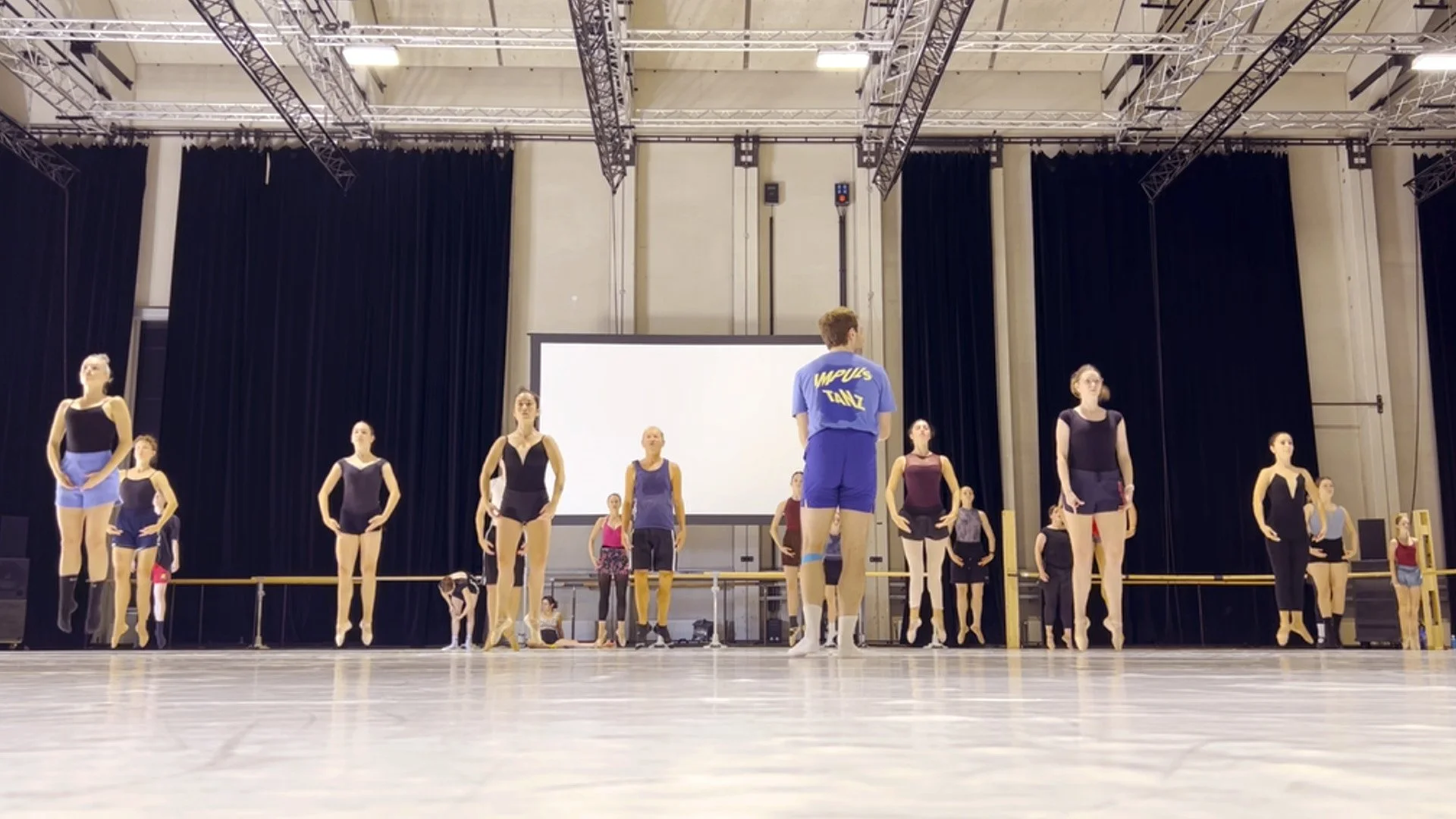
Deconstructing Ballet
2.5–4 hours / 1–4 days
An extended inquiry format inherited from Panetta, where core principles are approached from minor starting points and explored toward increasingly elaborate articulation of the body's possibilities in time and space.
These workshops create conditions for dancers to develop their own relationship to technique and the learning process itself, with benefits for composition, improvisation, and artistic decision-making.
Body Bricolage
3 days–1 week
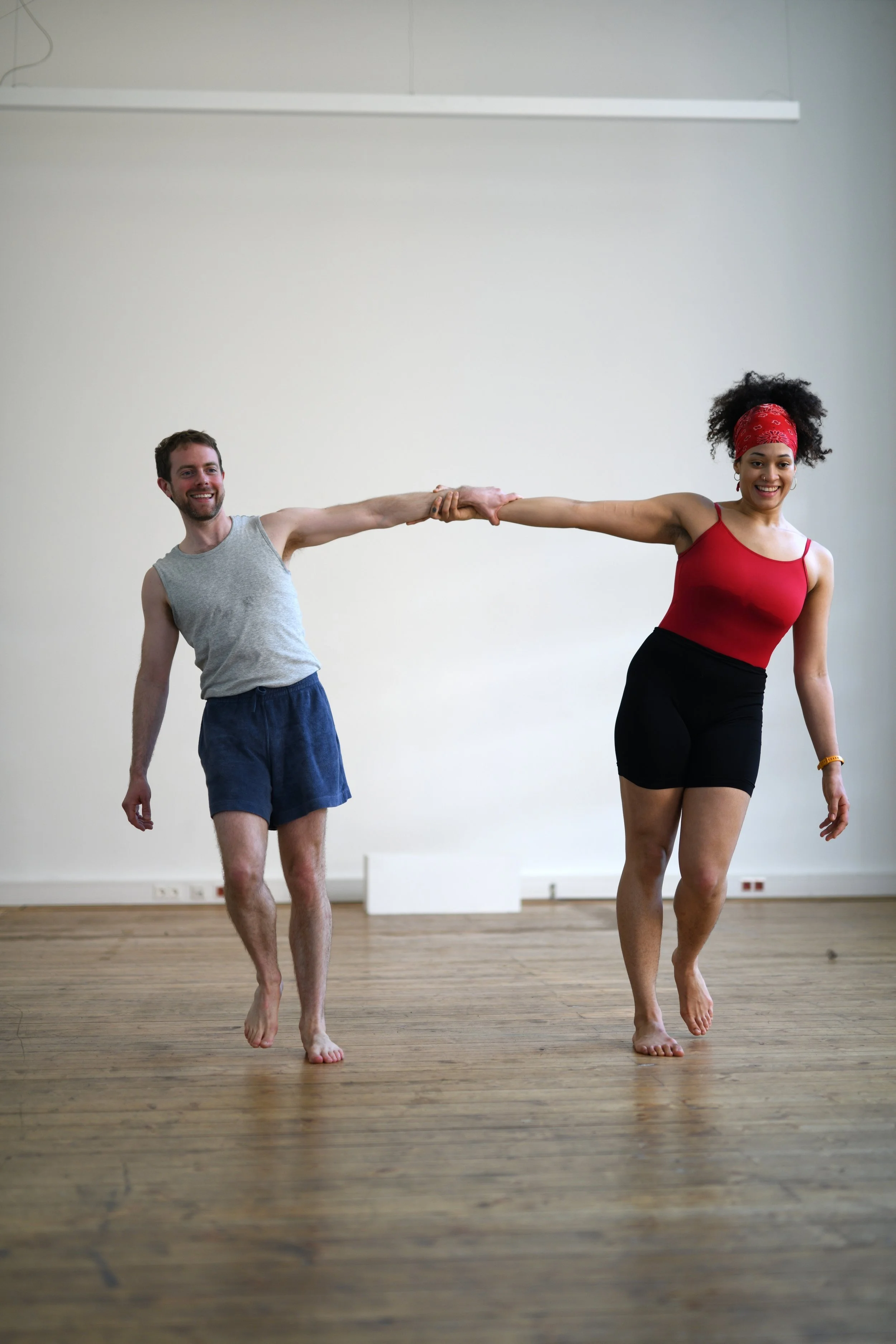
Body Bricolage begins from the understanding that technical transmission is always an exchange of propositions, but propositions don't have to flow unidirectionally from authority to student.
In this format, choreographic groups treat every body's movement as a proposition worth engaging seriously. Together, dancers and makers practice bricolage: taking familiar structures as available material and reassembling them according to their own artistic questions.
This work moves toward choreographic articulation and critical aesthetic inquiry that engages an audience.
An experiential lineage: Subtle qualities of ballet language and qualitative body studies
Ballet classes often motivate dancers with vague explanations and rules for the how the body ought to look. In contrast, there are the internal feelings of “correct.” Once something makes sense on an internal level, so much becomes possible artistically. There is different a look; a look that celebrates difference. This is an atmospheric shift in ballet study. My classes invite dancers to develop their own relationship to visibility and determination. Technique is the focus, a starting point to the learning process itself.
How can we attend to the minor qualities of ballet language—the technical materials that inspire deep understanding that allow us to translate technique to divergent movement aesthetics and languages?
By focusing on the placement of bones in the skeleton and use of the form with organic weight and gravity, I am interested in how technical materials can become a means of genuinely understanding how the body works for each individual body. Although understanding is always a slippery area, which compels us to repeat, and to enter into committed processes of learning, I do believe technique is teachable, and I offer concrete goals in my technique classes.
My approach attends to seemingly minor things – Where is the hip socket in relation to the corresponding ankle joint, heel and toes? To the shoulder blade? To the top of the head? What is the anatomical function of in incline of the head in a specific direction?
I bring these internal awarenesses of functional alignment and feelings for movement-capacity (and it’s inverse, which we also explore) to bear on students’ technique education. While this is a ton of work for students, actually, it becomes joyful when dancers complete an action successfully, and know why it worked out. The appearance of least resistance is as externally compelling as it is internally satisfying.
Janet Panetta and a continuing pedagogical practice
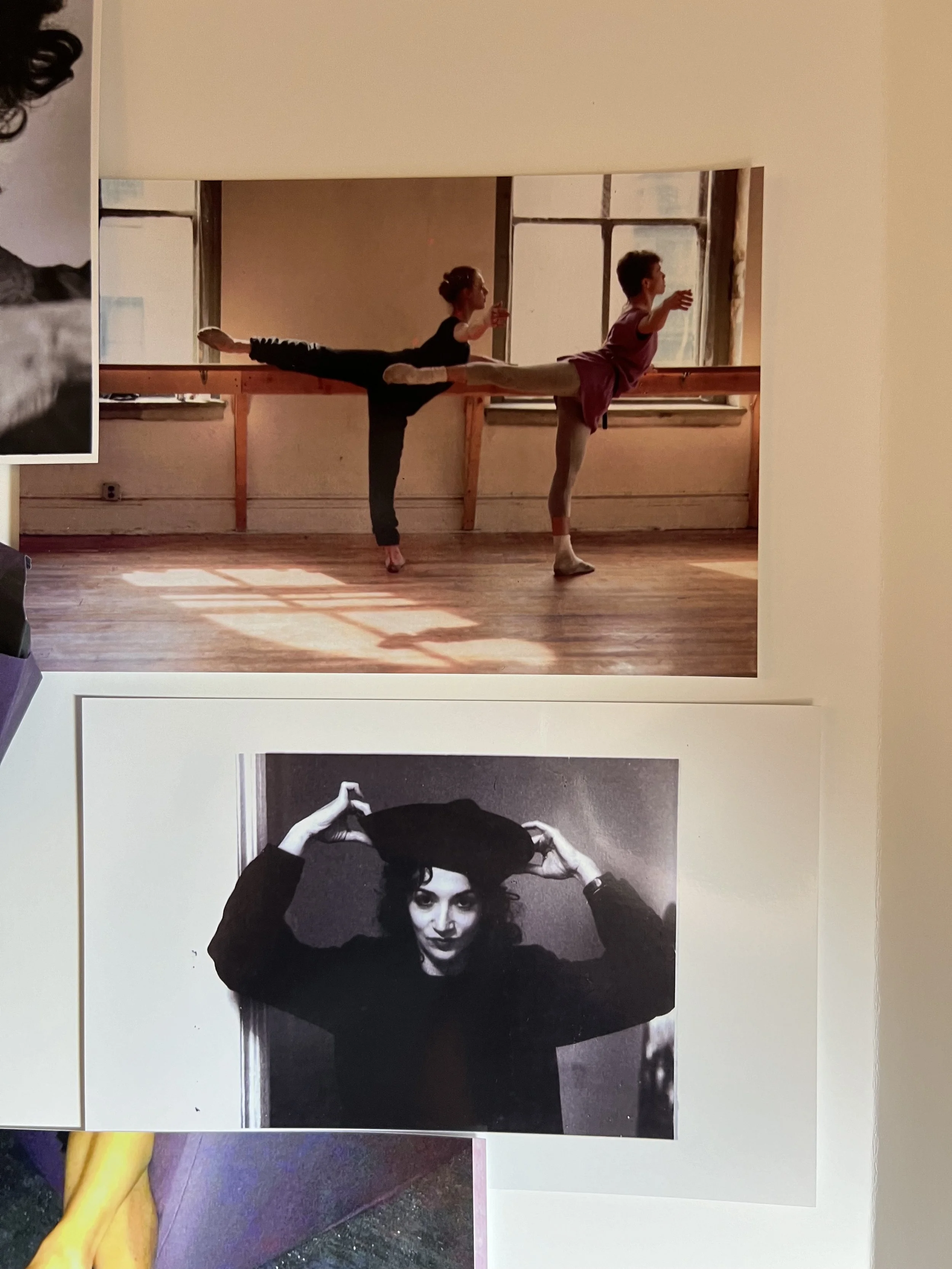
The teaching approach I work with comes from Janet Panetta (1948–2023), a Brooklyn-born dancer and pedagogue who spent over fifty years developing an alternative way of transmitting classical ballet.
Panetta trained in the Cecchetti method under Margaret Craske at the Metropolitan Opera Ballet School in New York City and was a ballerina with American Ballet Theatre, then chose an independent path that led her to work between Europe and New York City, across ballet, modern, postmodern and contemporary dance enclaves where she offered ballet technique as a continuity with movement forms as diverse as the somatic work of Alexander Technique and the rhythmic pathways of Axis Syllabus.
Her strategy was to instruct ballet form from the inside out.
According to my own interpretation, Panetta's central insight was a paradox: she often affirmed dancers' work, saying something like "You are already doing this." In this way, she affirmed the person doing ballet, their personhood could then relate to ballet regardless of their rank in experience or talent. Closer to the person, I experienced and witnessed how this intimate approach emancipated dancers intellectually. Over thirteen years, I saw participants in her classes transform, from feeling they would never be good enough to exhibiting the type of familiarity and soft confidence many classical dancers struggle to achieve. For her, dancers were inherently capable of ballet regardless of how much range they had in the arches of their feet. In this approach, the whole body becomes an asset to create with and care for.
Rather than correcting students toward an external image-ideal owned and withheld by the teacher, she located knowledge already present in the body and made it visible for others to perceive. This was not a reform of ballet, but a sharing of ballet language and knowledge of technique in a different way. At its core, the pedagogy is classical ballet, albeit with emphasis on the dancer's natural lift, momentum, and precise awareness of their axis in relation to the floor, which the repertoire of the Cecchetti technique emphasizes well.
Ten years as a teaching assistant and mentee.
I learned to teach from Panetta’s mentorship in the last ten years of her life, when she was highly active as a teacher with Tanztheater Wuppertal Pina Bausch, P.A.R.T.S. in Brussels and ImPulsTanz Vienna International Dance Festival. I demonstrated her class material for other students to observe, substituted her classes when she traveled and engaged with her in dialogues about her philosophy of deconstruction.
For her, teaching students was a movement from general to specific in anatomical terms that required the courage to be unsure and circle back. In one of our conversations, she told me,
"You can't skip A and get to C. You have to go A… B… C…, that's how we are specific. Right? So, I think that's very important and the more you know about your body like that the more you can imagine what can be done."
Since her death in 2023, I have felt her immense absence as an insightful conversation partner whose expertise on technique and experimental performance and pedagogy motivates ongoing research, and willingness to stay curious about how ballet relates to other dance forms and the people and communities who carry them. Since 2024, I have initiated dialogues with students who studied with Janet during her long career to further my understanding of what it feels like to work with this approach to ballet. My PhD research documents this work on pedagogical lineage and the ethics of ballet transmission and embodied aesthetic.
Anecdotes have brought me to think about Janet's practice with technique as grounded in creative acts of translation of original texts. Ballet teachers have an opportunity to not reproduce a fixed style as technical know-how, but to approach teaching as a situation where witnessing the dancer concerns reading the language of each body, what it already speaks, and finding where classical ballet might live within that language. As a pedagogical approach, it requires a level of patience, spontaneity, and curiosity and the willingness to not-know in advance what ballet can bring to each dancer. When I carry an old repertoire like Cecchetti forward, for example, I get to witness dancers use these forms, let them go, and bring them in again. That middle part is as valuable to the process as the formal itself. Each time they let go, they strengthen their knowledge of musical and formal structures in relation to active movement research and everyday life. Students also practice not lionizing ballet, which I think is healthy for contemporary dance and resisting racist, colonial, anti-feminist and classist structures that pervade our contemporary lives.
Janet attended to each body as a somatic system, diagnosing capacity rather than correcting error. This highly analytical practice is contemporary. It requires a quality of living attentiveness akin to witnessing performance. It cannot be written into a syllabus cleanly because attention slips, leaks, is pulled and fades as quickly. As it burns embodied memories into the body, technique is a slow process. There is simply too much contingency at play to determine in advance everything this way of working with dancers alongside a canonical form like ballet brings.
What Janet left behind were not notes or systems and certifications, but people who became experts in their own will to learn—an expansive creative community was formed in the process, a community motivated by inclusion and possibility for change. Dancers around the world carry this unique pedagogy in their bodies and continue transmitting it today.
I am one of those people.