Teaching Philosophy
At the core of my practice is a critical engagement with the body and how it learns, shaped by my own formation within diverse dance norms and production contexts. Working at the intersection of ballet pedagogy, contemporary choreography, and critical theory, my teaching balances the rigor of high-caliber technical training with the expansive inquiry of liberal arts and process philosophy. I approach pedagogy as a dynamic space where artistic practice and critical reflection are deeply intertwined—where movement is not only trained but continually questioned, reimagined, and situated within broader social and historical frameworks.
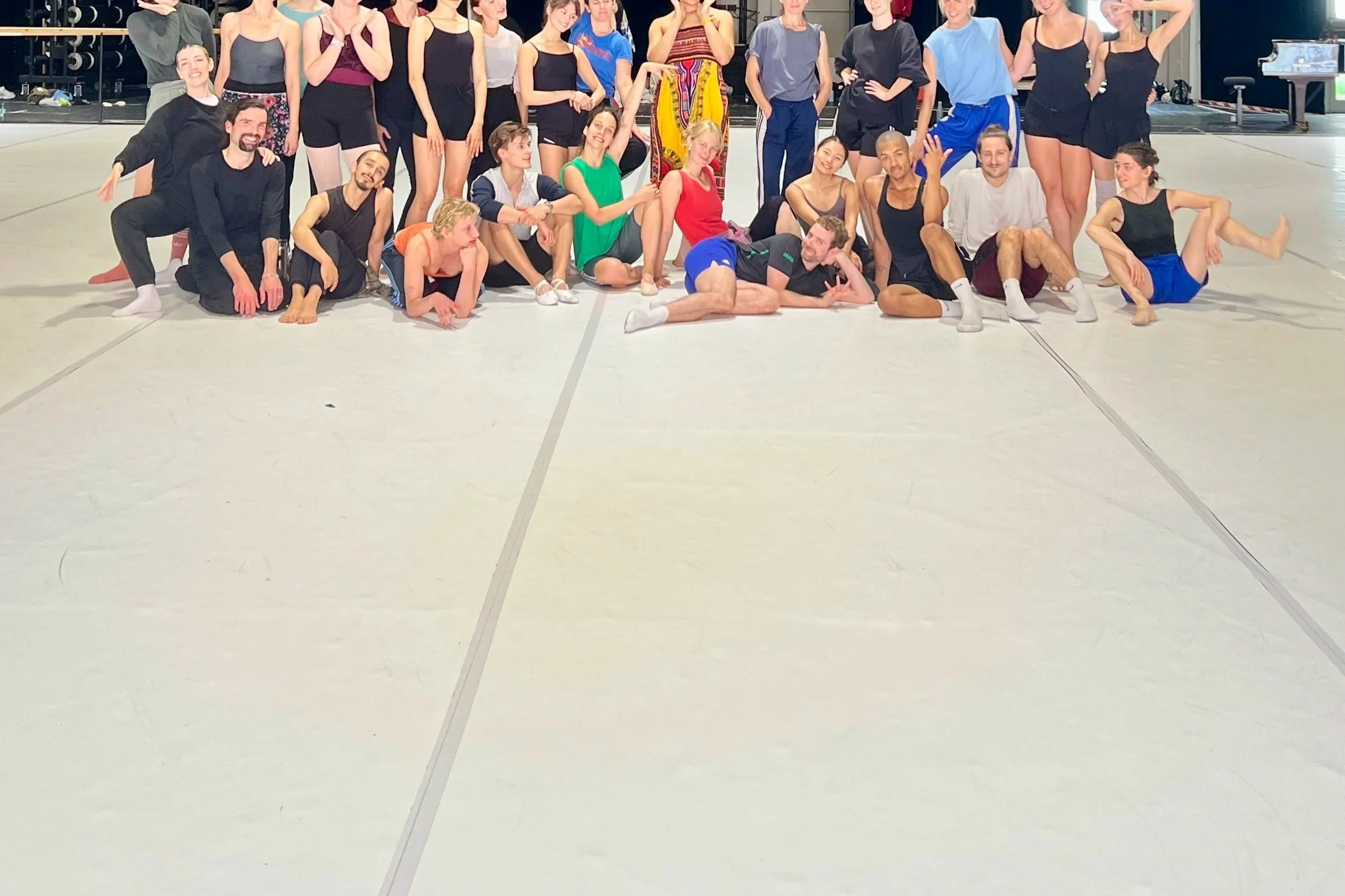
Dancers in the workshop Ballet for Contemporary Dancers (2025) at ImPulsTanz Vienna International Dance Festival
Institutional
Engagement
2016-Now: Teaching Professional Dance Companies, Dance Festivals & Universities
ImPulsTanz Vienna International Dance Festival — Teaching Professional Dancer Training (Ballet for Contemporary Dancers)
Iceland University of the Arts — Teaching in the Bachelor Dance Program (Ballet Technique, Dance Composition & Theory)
Norrdans — Teaching Professional Dancer Trainings (Ballet Technique)
Tanztheater Wuppertal Pina Bausch — Teaching Professional Dancer Trainings (Ballet Technique)
Judith Sánchez Ruíz Professional Contemporary Dancer Certification Program — Teaching Professional Dancer Training (Ballet for Contemporary Dancers)
Cullberg Stockholm — Teaching Professional Dancer Trainings (Ballet Technique)
University of the Arts Berlin / HZT — Teaching in the Bachelor Dance Program (Ballet Technique, Rhythm Studies, Improvisation, Dance Composition & Theory, Student Colloquia & Examinations)
Tanzquartier Vienna — Teaching Professional Dancer Trainings (Ballet for Contemporary Dancers)
Profitraining Basel — Teaching Professional Dancer Trainings (Ballet for Contemporary Dancers)
Marameo Berlin — Teaching Professional Dancer Trainings (Ballet for Contemporary Dancers)
Gibney Dance Center New York — Teaching Professional Dancer Trainings (Ballet for Contemporary Dancers)
Stockholm University of the Arts — Teaching in the Bachelor Dance Program (Ballet & Dance Composition)
The New School University — Teaching in the Bachelor Dance Program (Ballet Technique)
Danscentrum Stockholm — Teaching Professional Dancer Trainings (Ballet for Contemporary Dancers)
Landestheater Linz — Teaching Professional Dancer Trainings (Ballet Technique)
Studio for Artistic Dance Jo Siska Berlin — Teaching Professional Dancer Trainings (Ballet Technique)
Pro Dance Vienna — Teaching Professional Dancer Trainings (Ballet for Contemporary Dancers)
2022-now: Research Platforms
ImPulsTanz Vienna International Dance Festival — Field Research Project (Bad Ballet with Elizabeth Ward & Kevin Fay)
Abu Dhabi Department of Culture and Tourism — Workshop in the TA Fellowship Program (Embodied Bricoleur Artistic Research Interdisciplinary Approaches)
BACKPULVER Vienna — Feedback sharing and co-teaching workshop (Diffractive Dialogues with Malcolm Manning
BACKPULVER Vienna — Feedback sharing workshop
ImPulsTanz Vienna International Dance Festival — Field Research Project (Certain Dance Circumstance with Lenio Kaklea)
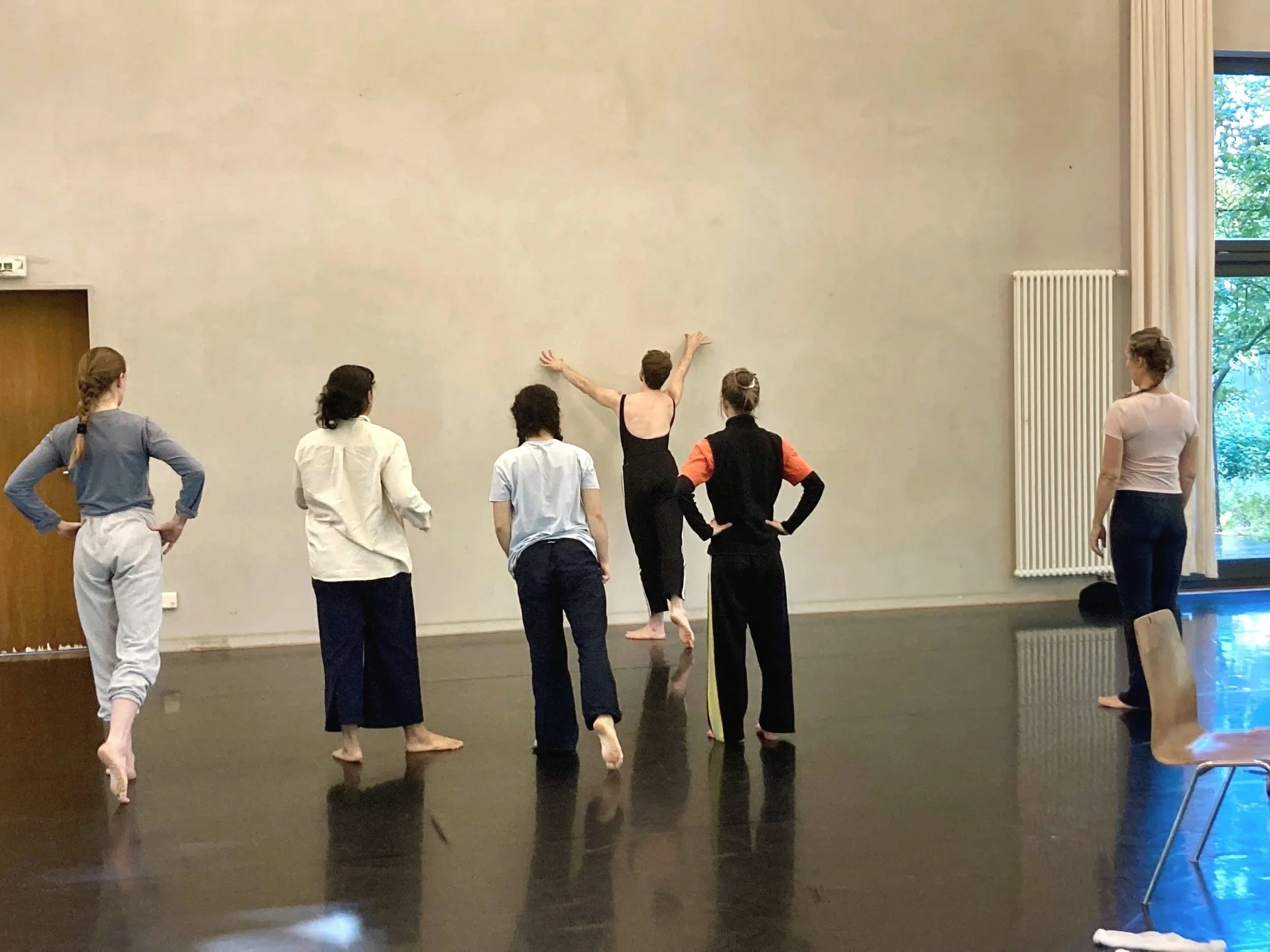
Dancers in Judith Sánchez Ruíz Professional Contemporary Dancer Certification Program, 2025
University Courses Taught
Ballet Technique
Technique Course
Functional anatomy forms the foundation of the technical study, emphasizing connections to both human expressivity and creative potential. The class focuses on initiating movement from the bones and allowing the muscles to function with greater efficiency, supporting a physically sustainable and artistically expansive ballet practice. As dancers engage more fully with the historical form, the Cecchetti method is introduced to reveal unexpected possibilities for dancers’ authorship — aligning personal agency with the rigor of classical training.
Embodied Bricoleur
Inter-Disciplinary Course
Embodied Bricoleur is a laboratory dedicated to exploring movement, pleasure, and technique as tools for collective choreographic invention and research creations. Highlighting sensual experience, the course centers on the creative process while fostering critical reflection on pedagogy and the transmission of knowledge. It asks: How can we remix, reconstruct, and reuse embodied artifacts — those familiar movement fragments, habits, and gestures — to generate new meanings and insights from accessible dance materials?
Rhythms, Colors, Patterns*
Inter-Disciplinary Course
This interdisciplinary course explored the relationship between embodied movement and musicality, bridging dance technique with sonic awareness. Moving between practical and theoretical approaches to the dancing body and the experience of sound, we framed rhythm as both a technical skill and a historical form of knowledge. Students engaged with musical concepts such as jazz syncopation, polyrhythms, minimalism, and silence through structured movement exercises, guided listening, and hands-on work with piano, drums, and other percussive instruments.
Co-facilitated with jazz musician and piano teacher Asaf Fleischmann
Ballet in Times of Change, or: Why the Pleasant Face?*
Inter-Disciplinary Course
This interdisciplinary course examined the genealogy of smiling and other codified facial expressions within the spectacle of ballet. As a conceptual and practical inquiry into normative representation and the dancing body, we worked with improvisational tools to explore the textures of the face and how certain expressions become habitual within this historical form.
Co-facilitated with sound artist and dancer Zen Jefferson
Yesterday Today Tomorrow: My Movement Practice*
Inter-Disciplinary Course
Investigating movement technique and creative process as pluralist constructions, this course engaged an intergenerational perspective on aging and dance, encouraging students to critically reflect on their personal histories of movement — within both educational and everyday contexts — and to incorporate these into ongoing research on mobility, coordination, and precision.
Co-facilitated with dancer and dance teacher Regina Baumgart
Play it as it Lays
Composition Workshop
(Title borrowed from Joan Didion’s novel)
Throughout the course, participants developed small-group compositions, modifying score-based directives, reflecting on their effects, and performing iterative versions for one another. The workshop emphasizes embodied inquiry, collaborative experimentation, and the compositional potential of attentive listening and choreographic writing.