As a performance practice in dialogue with art and physical culture, ballet is not something anyone is born to do.
People learn to do it.
Technique is an experience of constant, attentive learning, which is its beauty.
When I touch this wall I am touching the pedagogy of Janet Panetta. I am touching those she has touched and who have been touched by her work, in an ongoing cycle, aiming to feel for things we want to feel more of, but we don’t yet fully understand. My pedagogy is involved with these sensitive networks of feeling, on and on.
Teaching and Research Activities
-
Tanztheater Wuppertal Pina Bausch
Dresden Frankfurt Dance Company
Norrdans
Cullberg
Landestheater Linz
-
Iceland University of the Arts — Teaching in the Bachelor Dance Program
Ballet Technique
Composition & Art Research
Stockholm University of the Arts — Teaching in the Bachelor Dance Program
Ballet Technique
Composition & Art Research
University of the Arts Berlin / HZT — Teaching in the Bachelor Dance Program
Ballet Technique
Rhythm Studies
Improvisation
Composition & Art Research
Student Colloquia
Examinations
Concerts
Zurich University of the Arts — Teaching in the Bachelor and Masters Dance Program
Ballet
Art Research
The New School University — Teaching in the Bachelor Dance Program
Ballet Technique
Concerts
-
ImPulsTanz Vienna International Dance Festival
Judith Sánchez RuízProfessional Contemporary Dancer Certification Program
Tanzquartier Vienna
Mousonturm Frankfurt
Profitraining Basel
Marameo Berlin
Gibney Dance Center New York City
Danscentrum Stockholm
-
ImPulsTanz Vienna International Dance Festival — Field Research Projects
Bad Ballet (2025) with Anna Leon, Elizabeth Ward & Kevin Fay
Certain Dance Circumstance (2023) with Lenio Kaklea
Abu Dhabi Department of Culture and Tourism — Workshop in the TA Fellowship Program
Embodied Bricoleur Artistic Research Interdisciplinary Approaches (2025)
BACKPULVER Vienna — Feedback sharing and co-teaching
Diffractive Dialogues with Malcolm Manning (2024)
Feedback sharing workshop (2023)
Zürich University of the Arts — 3rd Cycle Junior Research Group for the PEERS Program & Artistic Research PhDs (2022)
Epistemic Adaptations in Art & Research , a dialogue with VK Preston & Macklin Kowal
-
Tanzquartier Paper (2025)
Body and Performance Practices Index
Envelope 6 (2024)
Published Essay
The University of Applied Arts Vienna Research Journal
Envelope 5 (2023)
Published Essay
The University of Applied Arts Vienna Research Journal
-
University of Music and Performing Arts Vienna
Resisting Mastery (2025), Lecture Performance
Dance Resonance Artistic Attunement in Motion Symposium
The University of Applied Arts Vienna — Angewandte Public Colloquium (2025)
Performance Lecture, Doctoral Program in Artistic Research
The University of Applied Arts Vienna — Angewandte Public Colloquium (2025)
Performance Lecture, Doctoral Program in Artistic Research
ImPulsTanz Vienna International Dance Festival — Memorial Event (2024)
Put me on a Planet Where Everyone Looks Like Janet, a celebration of life with live performance, music, and talks
The University of Applied Arts Vienna — Angewandte Public Colloquium (2023)
Performance Lecture, Doctoral Program in Artistic Research
Zürich University of the Arts — Knowledge and Practice Sharing (2024)
Let’s Talk About Ballet, a dialogue & workshop with Prof. Dr. Friederike Lampert
Janet Panetta Repertoire — Exhibition on the Life and Work of Artist Janet Panetta at Garth Greenan Gallery NYC (2024)
Scholar in Residence
Angewandte Public Colloquium (2024)
Performance Lecture & Epistemic Decompression
Doctoral Program in Artistic Research
The University of Applied Arts Vienna
Society of Artistic Research —Conference in Tilburg the Netherlands (2024)
Soften and Make Space (2024), activation for Special Interest Group (SIG): Facilitation
-
Ballet Technique
Technique CourseFunctional anatomy forms the foundation of the technical study, emphasizing connections to both human expressivity and creative potential. The class focuses on initiating movement from the bones and allowing the muscles to function with greater efficiency, supporting a physically sustainable and artistically expansive ballet practice. As dancers engage more fully with the historical form, the Cecchetti method is introduced to reveal unexpected possibilities for dancers’ authorship — aligning personal agency with the rigor of classical training.
Embodied Bricoleur
Inter-Disciplinary CourseEmbodied Bricoleur is a laboratory dedicated to exploring movement, pleasure, and technique as tools for collective choreographic invention and research creations. Highlighting sensual experience, the course centers on the creative process while fostering critical reflection on pedagogy and the transmission of knowledge. It asks: How can we remix, reconstruct, and reuse embodied artifacts — those familiar movement fragments, habits, and gestures — to generate new meanings and insights from accessible dance materials?
Rhythms, Colors, Patterns*
Inter-Disciplinary CourseThis interdisciplinary course explored the relationship between embodied movement and musicality, bridging dance technique with sonic awareness. Moving between practical and theoretical approaches to the dancing body and the experience of sound, we framed rhythm as both a technical skill and a historical form of knowledge. Students engaged with musical concepts such as jazz syncopation, polyrhythms, minimalism, and silence through structured movement exercises, guided listening, and hands-on work with piano, drums, and other percussive instruments.
Co-facilitated with jazz musician and piano teacher Asaf Fleischmann
Ballet in Times of Change, or: Why the Pleasant Face?*
Inter-Disciplinary CourseThis interdisciplinary course examined the genealogy of smiling and other codified facial expressions within the spectacle of ballet. As a conceptual and practical inquiry into normative representation and the dancing body, we worked with improvisational tools to explore the textures of the face and how certain expressions become habitual within this historical form.
Co-facilitated with sound artist and dancer Zen Jefferson
Yesterday Today Tomorrow: My Movement Practice*
Inter-Disciplinary CourseInvestigating movement technique and creative process as pluralist constructions, this course engaged an intergenerational perspective on aging and dance, encouraging students to critically reflect on their personal histories of movement — within both educational and everyday contexts — and to incorporate these into ongoing research on mobility, coordination, and precision.
Co-facilitated with dancer and dance teacher Regina Baumgart
Play it as it Lays
Composition Workshop
(Title borrowed from Joan Didion’s novel)Throughout the course, participants developed small-group compositions, modifying score-based directives, reflecting on their effects, and performing iterative versions for one another. The workshop emphasizes embodied inquiry, collaborative experimentation, and the compositional potential of attentive listening and choreographic writing.
-
Teaching began through my own need to understand movement clearly. Technique was often presented to me as something opaque or unquestionable, and I became committed to finding more direct, relational, and adaptable ways of learning. My teaching practice is grounded in the belief that technical training should create clarity rather than confusion, and that strong structures can support freedom, consistency, and the courage to experiment. I approach teaching as both a practical and relational process: building conditions in which dancers can develop precision, confidence, and critical awareness within the intensity of artistic work and creative processes.
In dance-making, many things are happening simultaneously, and the body is always present within that complexity. Contemporary dancers need practices that develop sensitivity: understanding when to use strength, when to release, and how to move between these states with precision. My teaching is rooted in classical ballet, but shaped through a critical and adaptive approach to transmission. Rather than emphasizing external affectation, I focus on the specificity of how movement functions. By breaking technique down into clear principles and technical fundamentals, I aim to make complex movement more accessible, reliable, and applicable to contemporary choreographic practices.
Whether working with set material or improvisational structures, I approach musical precision and rhythmic specificity as foundations for presence, curiosity, and individual interpretation. The rigor of the classical form remains central to my teaching, particularly through principles derived from the Cecchetti Technique, but the mode of transmission adapts to different bodies, contexts, and ways of understanding. I do not believe technique should demand sameness. Instead, I see it as a living practice that can support diverse artistic and physical experiences while maintaining structural rigor.
I developed this approach through intensive study with the late ballet teacher Janet Panetta (1948–2023), whom I assisted internationally for ten years in professional workshops, university courses, and with professional dance companies. Through this close mentorship, I learned how ballet training can be transmitted with both rigor and care, allowing artists from varied backgrounds to deepen their awareness of how things in their body works, and maintain a practice of constant learning.
I carry this work forward with the conviction that ballet must continue to evolve because people evolve. Forms sometimes need to loosen in order to return with greater clarity. Through attentive repetition and sustained listening, to ourselves and one another, technique can become not only a tool for performance, but also a way of shaping our artistic identities and learning communities.
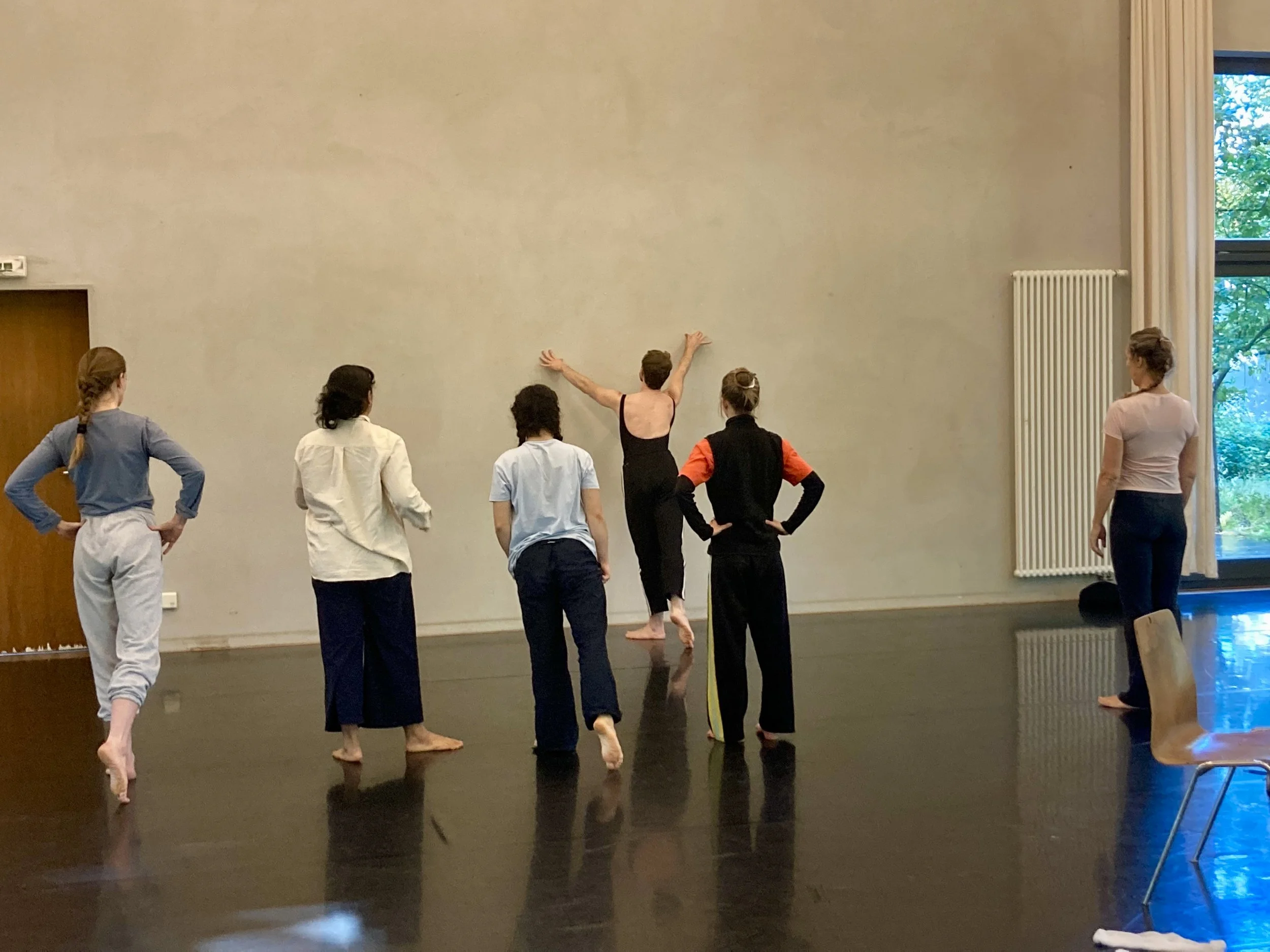
Dancers in Judith Sánchez Ruíz Professional Contemporary Dancer Certification Program. Photo by Judith Sánchez Ruíz.